
If excess gum tissue is compromising your smile or health, we offer gingivectomy to remove the tissue and create a more balanced appearance.
Do you have too much or too little gum tissue? Gingivoplasty (gum remodeling) can help you get the smile you want quickly and painlessly. Gingivoplasty is a surgical procedure that aims to reshape the gums, removing excess tissue or restoring areas where gum tissue is missing. This surgery is performed under local anaesthesia and can have both medical and aesthetic purposes.
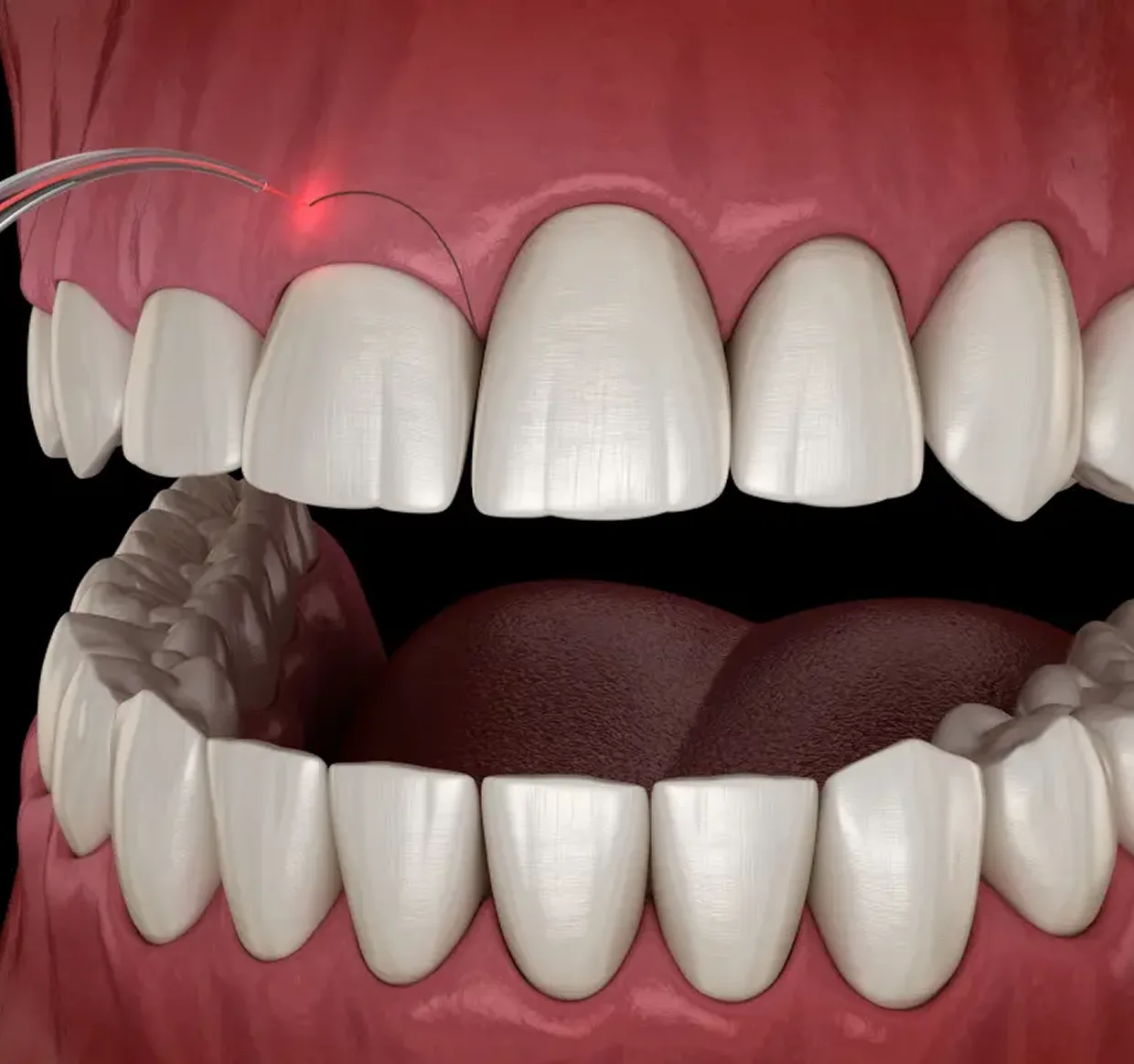
What is gingivoplasty?
Gingivoplasty is a surgical procedure aimed at correcting gingival tissue, and includes remodeling (gingivectomy), extension or regularization of the gums, with the aim of improving both aesthetic appearance and oral health.
Functions of the gums
The gums act as a protective barrier for the teeth, shielding them from external damage and bacterial intrusion. Gum recession is irreversible, so prevention is essential to avoid gum withdrawal. Healthy gums contribute to oral well-being and play an important role in creating a pleasant smile, often associated with self-confidence.
What affects the appearance of the gums?
Several factors influence the shape and appearance of the gums, including the brushing technique and the quality of oral hygiene.
Purposes and types of treatment
Gingivoplasty can have different purposes. The underlying cause of the gingival changes determines the most suitable therapeutic approach and technique. There are different surgical modalities, all of which are effective and with good long-term results.
In general, gum remodeling procedures are simple, but require precision to obtain a satisfactory aesthetic result. The techniques may involve the use of scalpels or lasers and may cover a single tooth, multiple teeth, or an entire arch. Corrections can be performed on both the upper and lower gums.
If there are no untreated diseases and oral hygiene is good, gingivoplasty may respond to:
01
Medical Purposes
- Restoration of receding gums: In cases of gum damage due to gingivitis or periodontitis, gingivoplasty can restore the functionality and aesthetics of the gums. Treatments for gum recession usually include a gum graft or stretching adjacent tissue to cover exposed areas.
- Strengthening gingival support for implants: If a tooth is missing and has not been replaced, the volume of bone and gum in the area tends to decrease. Before placing an implant, a gum graft may be necessary to ensure adequate support and an even gum line.
- Reduction of gingival pockets: In cases of severe periodontitis, deep pockets may form between teeth and gums, which require surgery to reduce them, improving oral hygiene and health.
- Removal of excess tissue due to gingival hyperplasia: Abnormal growth of gum tissue may result from inflammation, side effects of medications, or hormonal factors. Surgery may be necessary to reduce tissue and restore optimal functionality and aesthetics.
02
Aesthetic Purposes
For purely aesthetic needs, the gingival contour can serve to harmonize the gum line or to remove excess tissue. The most common treatments include:
- Gummy smile (gingival smile): Excess gum tissue may cause teeth to appear smaller. Gum contouring can improve the balance between the gums and teeth.
- Short upper lip: Surgery can adjust the position of the upper lip in relation to the teeth, creating a more balanced smile.
- Overactive lip muscles: Botox injections can relax overactive lip muscles, reducing gum exposure when smiling.
Is gingivoplasty painful?
The procedure is painless thanks to local anesthesia. It can last from half an hour to several hours depending on the complexity. The healing time varies from one to several weeks.
Preparing for gingivoplasty
It is advisable to avoid the use of tobacco before surgery to promote healing. The dentist will do a thorough dental cleaning before the procedure.
Post-operative care and advice
To promote healing, your dentist may recommend an antiseptic mouthwash. A subsequent check will make it possible to verify that the healing is proceeding properly. It is also recommended to: Eat soft foods and avoid hard or crunchy foodAvoid alcohol and tobacco products. Brush gently with a soft toothbrush and use fluoride toothpaste
Risks and side effects
Long-term complications are rare, but may include bleeding, infection, or discomfort. In case of prolonged bleeding, marked swelling, severe pain or swelling of the jaw, you should contact your dentist: these symptoms may be indicative of infection.

Oops! Something went wrong while submitting the form.
Find our clinic
We are at: Via Pico 19, 6900 Lugano - Switzerland

Bus
Take Bus No. 3 to Cassarate, Scuole and walk approximately 3 minutes along Via del Tiglio, or take Bus No. 2 to Cassarate, Monte Brè followed by a 5-minute uphill walk along Via Pico to our clinic.

Bicycle
Bike kiosks are available at Parco Giochi on Via del Tiglio, just around the corner from Alpine Smiles.

Parking
We have two private parking spots directly in front of the clinic. Free blue zone parking is also available on the surrounding streets. The nearest paid car park is Parcheggio Piazza Riscossa.

Ferry
Take the ferry to the Cassarate stop, next to the Grand Hotel Villa Castagnola and the Funicolare Monte Brè. From there follow Via Pico uphill to our clinic.
